
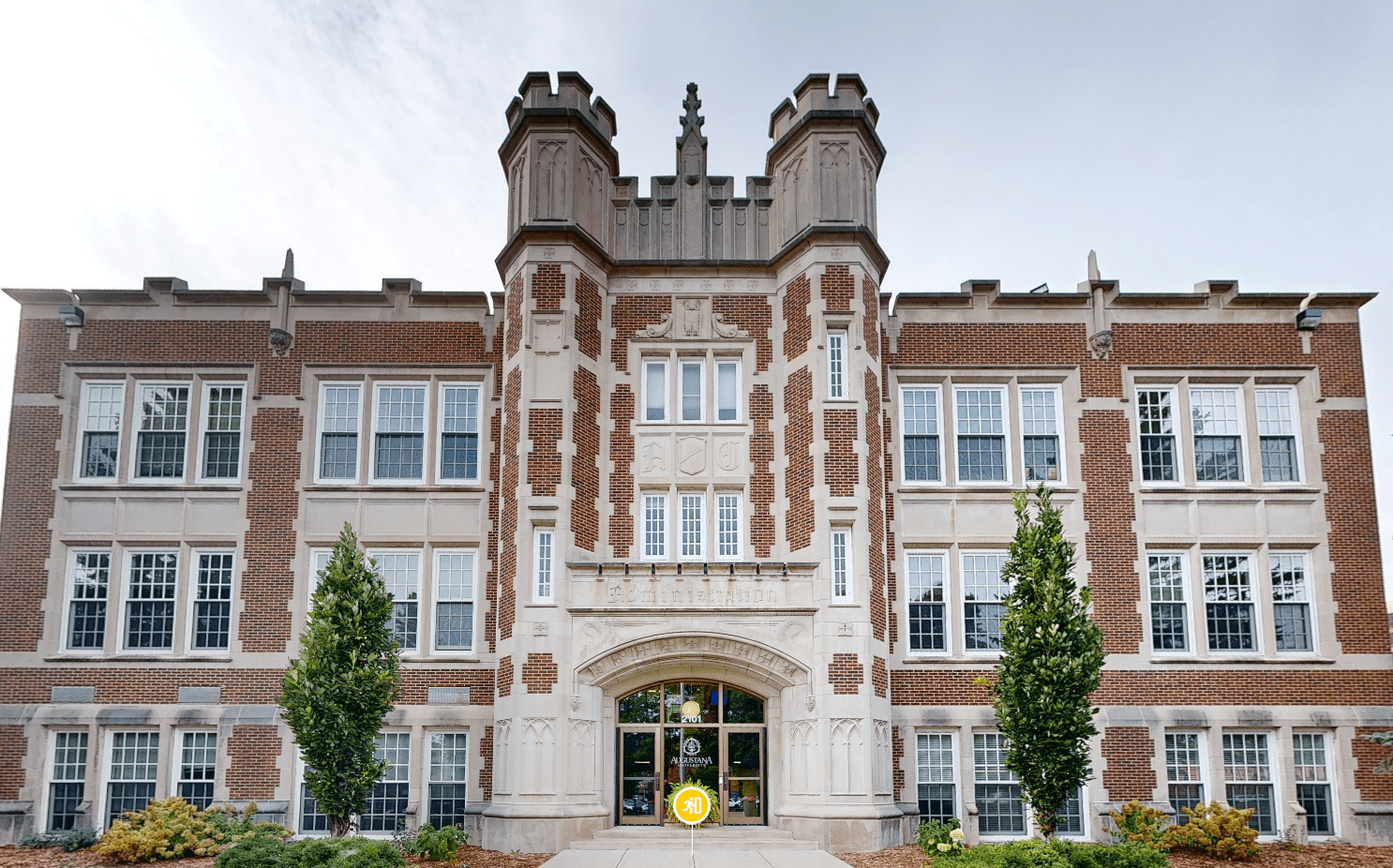
What if every student, faculty member, and visitor could explore our campus—anywhere, anytime, in full 3D?
That’s the vision behind Digital Twin Imaging (DTI), a Sioux Falls-based company translating physical environments into immersive digital spaces.
From Medicine to Metaverse
Dr. Maria Bell, a renowned oncologic surgeon and technology pioneer, founded DTI after realizing that the spatial-precision tools of medicine could revolutionize how we map and experience real-world spaces.
Initially focused on medical visualization, DTI found new purpose after the Uvalde school tragedy underscored the urgent need for accurate digital environments in public safety and education.
“I saw how precise imaging could save lives in the operating room,” Bell explains. “Why couldn’t that same precision help save lives in schools and communities?”
Using LiDAR scanning, 360° photography, drones, and advanced 3D modeling, DTI now creates high-fidelity “digital twins” of buildings—virtual replicas that can be explored, analyzed, and secured. These twins enable detailed emergency response planning, from door locks to evacuation routes, and are now being adopted across multiple sectors including education.
A New Layer of Learning at Augustana
For Augustana University, the implications go far beyond safety. Through DTI, the university is beginning to build an immersive, data-rich digital version of its campus.
This collaboration opens doors for:
- Planning & Preservation: Facilities teams can simulate renovations, test space utilization, and digitally preserve campus architecture.
- Virtual Tours: Prospective students can experience the campus in VR, anytime, anywhere.
- Learning in 3D: Faculty can explore how XR can extend classroom experiences.
- AI+XR = Customized Learning: Blending speech-to-speech large language models in creates infinite possibilities to practice soft skills in a repeatable, judgement-free zone.
Innovation That Saves Time and Lives
In early pilot programs, emergency responders trained using DTI’s digital twins reduced their entry-to-target times from over seven minutes to under thirty seconds. That kind of precision doesn’t just improve operations—it can transform outcomes.
At Augustana, that same precision can now improve student experience, faculty innovation, and strategic decision-making.
Beyond the Physical
Digital twins aren’t just replicas. They’re living archives—a bridge between creativity and computation.
They capture not only how spaces look, but how they feel, move, and sound.
“Technology doesn’t replace human experience,” Bell notes. “It enhances our ability to understand and shape it.”
As Augustana University expands its leadership in AI, XR, and immersive education, partnerships like this one illustrate a core truth: innovation thrives where disciplines intersect.
Looking Ahead
DTI’s collaboration with Augustana marks just the beginning. The digital campus infrastructure will eventually support:
- VR-based onboarding for new students
- AI-powered accessibility navigation
- Data-driven facility planning and acoustic mapping
- Immersive storytelling experiences for prospective donors and alumni
We’re entering an era where every space tells a story—and now, every story can live in 3D.
About Digital Twin Imaging
Digital Twin Imaging (DTI) is a Sioux Falls–based company using 3D imaging, AI, and virtual modeling to build hyper-realistic digital replicas of physical environments. Founded by Dr. Maria Bell, DTI’s mission is to enhance safety, learning, and accessibility through spatial data and immersive technology.
Learn more at https://digitaltwinimaging.com.

 Peter J. Folliard